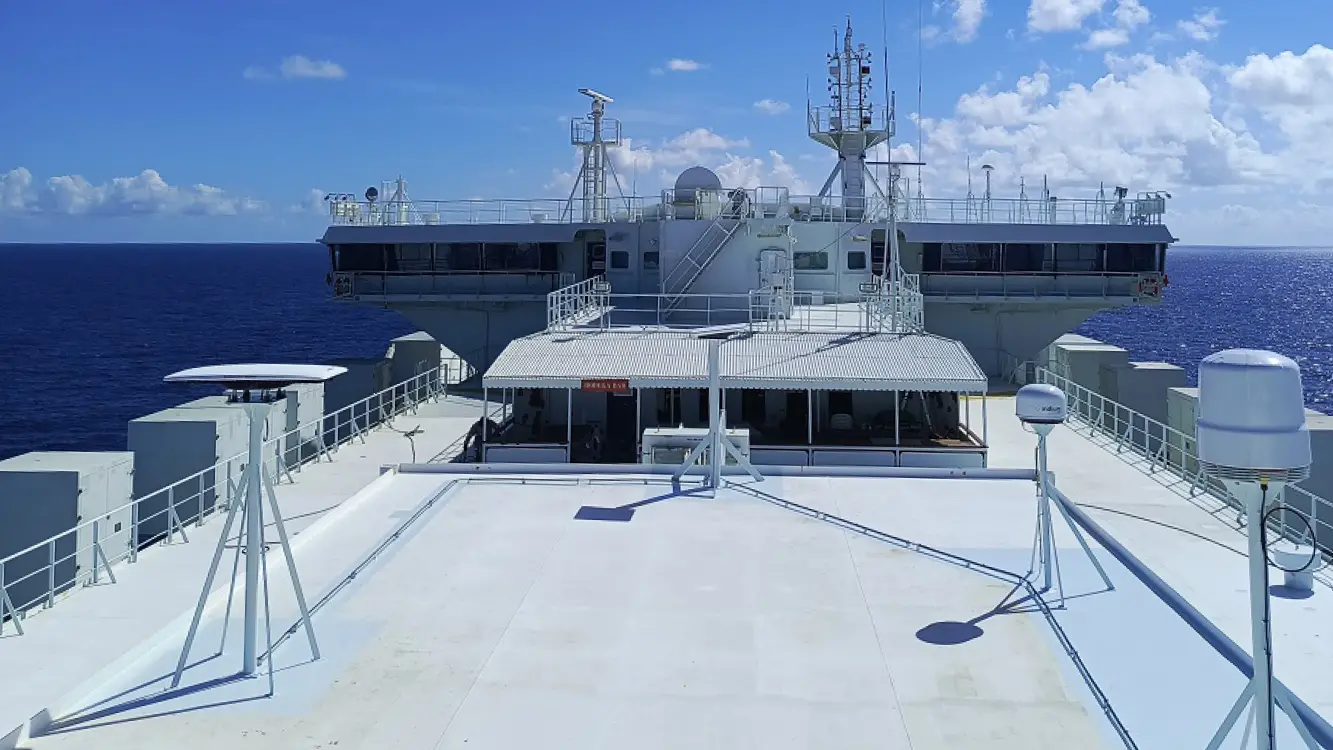
From single links to an ecosystem
Onboard a vessel, connectivity impacts everything from operations and safety to crew wellbeing and the ability to work in a data-driven way. As reliance on data continues to grow, connectivity has become a strategic issue—not just for IT, but for operations, safety, and business development.
Yet many vessels still rely on only one or a few connectivity options. That creates a risk—one that is often entirely avoidable.
Why single-link connectivity is no longer enough
Traditionally, vessels have depended on one or two primary connectivity solutions. This has worked—as long as conditions were stable. But today’s reality is different:
- New satellite systems are being introduced at a rapid pace
- Geopolitical tensions are affecting access, control, and reliability of global networks
- Data volumes are increasing
- Expectations for uptime are approaching onshore levels
This makes single connectivity solutions a weak point. Instead, a new approach is emerging: connectivity as an ecosystem, where multiple technologies work together and complement each other.
The technology shift driving change
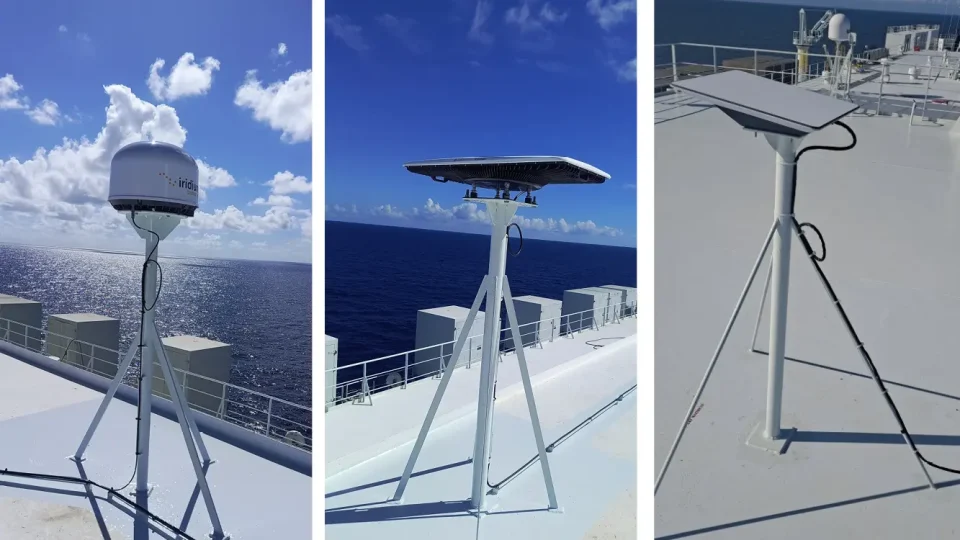
Much of this development is driven by new satellite-based alternatives:
- Starlink and OneWeb are reshaping expectations for speed and latency through LEO satellites
- Iridium Communications continues to set the standard for global availability
- Traditional VSAT offers stability and proven performance
- Terrestrial networks (4G/5G) provide additional coverage where available
Each of these technologies has its strengths—and its limitations. It is in combination that they become truly powerful.
Hybrid connectivity – what does it really mean?
The term is widely used, but often misunderstood. Hybrid connectivity is not about having multiple subscriptions—it is about how they work together.
In practice, it means:
- Dynamic switching between different carriers
- Policy-based traffic management
- Prioritisation of critical functions
- Continuous optimisation based on availability and performance
This is where the difference lies between a technical installation—and a well-designed architecture.
The hidden limitation: antenna infrastructure

Amid this rapid development, one factor is often overlooked: the antennas.
Choices made just a few years ago can now limit the ability to:
- Connect to new satellite networks
- Benefit from improved performance
- Adapt to changing needs
This creates inertia in the system—where infrastructure no longer keeps pace with technological development. Flexibility in the physical installation therefore becomes a strategic issue, not just a technical detail.
When connectivity becomes an enabler

When connectivity moves from being “good enough” to robust and flexible, it transforms the entire operation. It enables:
- Real-time operations and decision support
- Remote support and reduced need for onboard interventions
- Improved cybersecurity through centralised control
- A more attractive working environment for the crew
From this perspective, connectivity becomes a foundation for digitalisation—not a standalone technical function.
From subscriptions to architecture
A clear shift is underway.From:
- Choosing providers
- Price per megabyte
To:
- Resilience and redundancy
- Long-term flexibility
- Ability to integrate new technologies
Connectivity is increasingly treated as an architectural question—where the whole matters more than the individual parts. A clear example of this shift is a project where Soya IT Marine Solutions is upgrading satellite communications on 41 ocean-going vessels. This is not just about new technology, but about building a more robust and flexible connectivity architecture—with multiple parallel systems and installation carried out without operational downtime. It also points to the direction ahead: connectivity is no longer a single solution, but a continuously evolving enabler of modern shipping.
Questions to consider
For shipowners and operators, it is becoming increasingly important to challenge the current setup:
- How vulnerable are you to a failure in a single carrier?
- Are you built for change—or locked into our current solution?
- Do you only discover gaps when it is already too late?
- Do you have true redundancy—or just multiple subscriptions?
Not sure how your current setup compares?
Get in touch—we’ll be happy to review your setup and explore how to strengthen the robustness and flexibility of your connectivity.
Learn more about our connectivity solutions